
Sectors · Occupational health
Agriculture and Livestock
In agriculture and livestock farming, occupational health is important for managing risks connected with outdoor work, agricultural machinery and contact with animals and biological agents. Legislative Decree 81/2008 also applies to agricultural businesses, with specific duties for worker protection.
The sector is characterised by strong operational variability, seasonality and often demanding environmental conditions, requiring a targeted and continuous health approach.
Main risks in agriculture and livestock farming
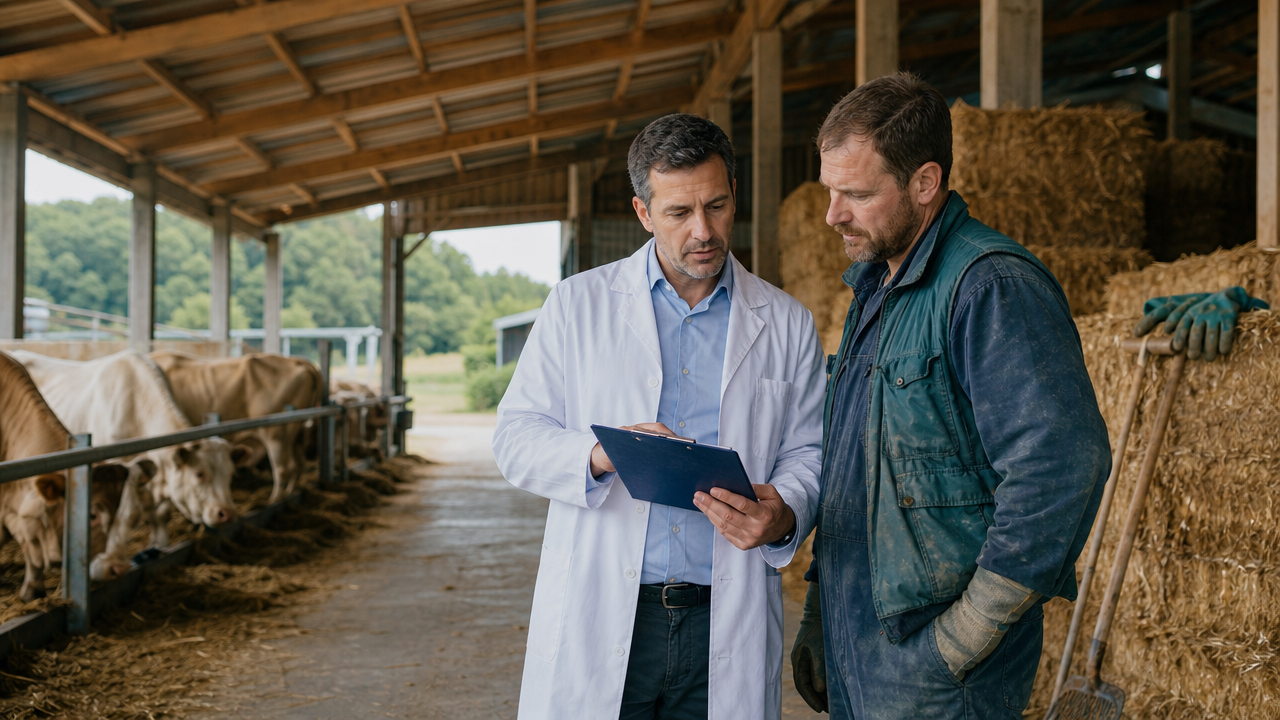
Agricultural risk assessment must consider environmental factors such as heat, cold, humidity and solar radiation, as well as tractors, machinery and equipment.
The sector also involves exposure to chemicals such as plant-protection products and fertilisers, and biological agents from contact with animals, slurry and organic materials. Manual handling, awkward postures and repetitive activities add to the risks.
In livestock farming, direct contact with animals and work in confined or poorly ventilated environments are especially important.
Health surveillance and fitness for agricultural work
Where these risks exist, the employer must appoint a competent physician to define health protocols for agricultural workers and livestock operators.
Health surveillance under Article 41 focuses on preventing respiratory, dermatological and musculoskeletal conditions and conditions arising from chemical exposure. The fitness-for-work assessment reflects the physical demands of work often performed in variable environments.
Health and risk records under Article 25 are essential for monitoring exposure over time, while training under Articles 36 and 37 must cover correct PPE use and sector-specific risk management.
Occupational health
Health assessments in agriculture and livestock farming
The competent physician defines examinations around the specific risks of each role. They may include:
- Spirometry: Respiratory checks for dust, pollen and organic agents
- General medical examination: Overall fitness for the role
- Blood tests: Monitoring chemical exposure and health status
- Musculoskeletal assessment: Preventing strain and load-handling disorders
- Allergy tests: Sensitivity to pollen, dust and natural agents
- Vaccinations: For example, tetanus vaccination
- Dermatological examination: Preventing conditions from contact with substances and biological agents
- Specific updates: For example, pesticides, animal contact and confined environments
All examinations belong in a personalised health protocol aligned with Legislative Decree 81/2008 and the actual role and workplace.
Skema HSE
Occupational health advice for agriculture and livestock farming
Skema supports farms and livestock businesses with an approach built around the sector’s real operating conditions. We analyse seasonal activities, machinery and working methods to identify risks and structure effective health surveillance.
We organise occupational health flexibly, considering seasonality and operating needs while coordinating the competent physician and planning health activities without disrupting production cycles.
We also support companies in meeting regulatory duties, helping reduce risks and improve work organisation.
Contact us for a tailored consultation and discover how we can help you manage safety effectively in your operating context.
Contact us for a tailored consultation.
REQUEST A FREE CONSULTATION