

Sectors · Occupational health
Healthcare and Care
In healthcare and care services, occupational health is essential for protecting both professionals and patients. Hospitals, clinics, residential care homes and care centres involve direct contact with people, biological materials and high-exposure environments.
The main reference is Legislative Decree 81/2008, especially Title X on biological agents. In this context, safety management requires a structured, continuous and highly specialist approach.
Occupational risks in healthcare
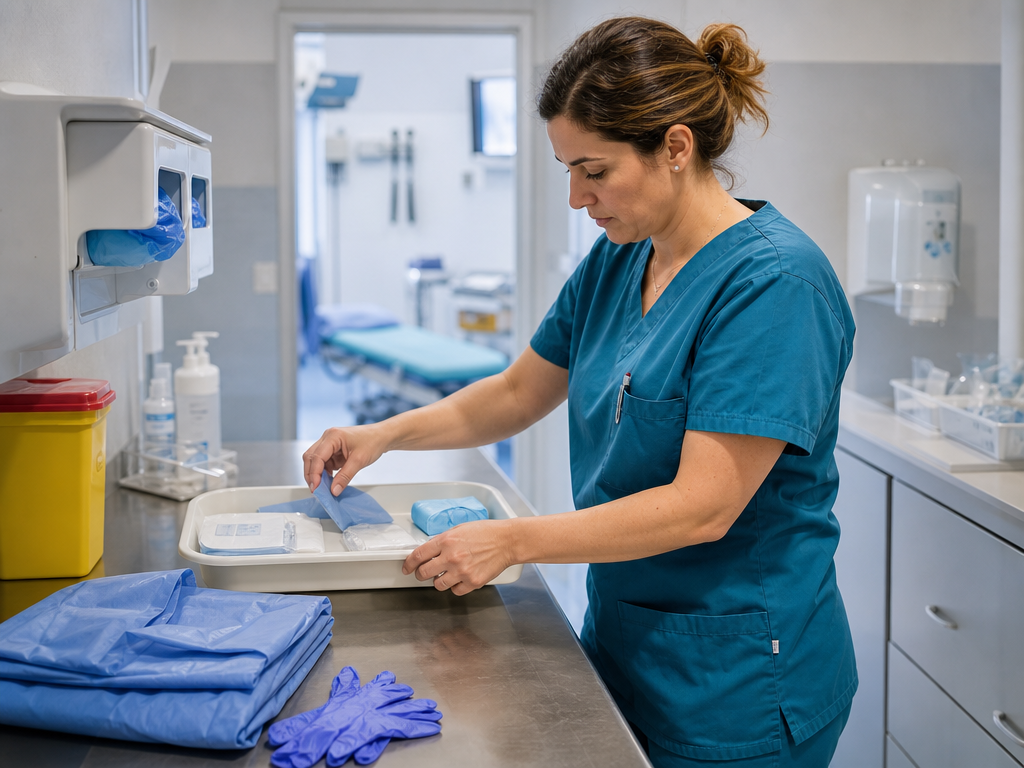
Unlike other sectors, the main risk in healthcare is exposure to biological agents such as viruses, bacteria and other potentially infectious microorganisms. This concerns physicians, nurses, healthcare operators, care workers and support staff.
Other important factors include accidental needlestick injuries, contact with biological fluids, patient handling, work-related stress and extended or night shifts. Many facilities also involve chemical risks from disinfectants and medicines.
Specific health surveillance and protocols
In healthcare, appointing a competent physician is mandatory in almost every case. The physician has a central role in defining specific health protocols built around duties and exposure levels.
Health surveillance under Article 41 is not limited to fitness for the role: it also includes preventing infection risk and managing exposure conditions. The assessment of workers’ vaccination status is especially important.
Health and risk records under Article 25 allow operators’ health to be monitored over time, while training under Articles 36 and 37 must address biological-risk prevention and operating procedures.
Failure to meet these duties can lead to sanctions, but above all represents a direct risk to the safety of operators and patients.
Occupational health
Health assessments
The competent physician defines examinations around the specific risks of each role. They may include:
- Blood tests: Health status and biological exposure
- Serology: Immunity and contact with infectious agents
- Vaccination status: Coverage such as hepatitis B and tetanus
- Infectious-disease screening: Prevention and early identification of infections
- General medical examination: Overall fitness for the role
- Musculoskeletal assessment: Patient handling and manual tasks
- Work-related stress assessment: Psychophysical load and shifts
- Other specialist checks: Assessments based on the role and specific risks
All examinations belong in a personalised health protocol aligned with Legislative Decree 81/2008 and the actual role and workplace.
Skema HSE
Specific surveillance and protocols
We build health protocols around operators’ duties and exposure levels.
We support monitoring of infection risk, vaccination status, work organisation and training.
Our goal is to protect staff and patients while meeting regulatory responsibilities.
Contact us for a health-surveillance programme built around the way care is delivered.
Contact us for a tailored consultation.
REQUEST A FREE CONSULTATION